How to Read a Multi-Parcel Attachment in a Michigan Tax Appeal
A property tax appeal may contain one petition and a separate page listing additional parcels. That extra page can look like a second case when viewed outside its context. It is usually an attachment to the petition: a way to identify more property within the filing. A reader who treats each row as a new case, or treats the first parcel on the petition as the whole dispute, can describe the archive incorrectly.
This guide is for reading a public Michigan Tax Tribunal case file. It explains how to connect a multi-parcel attachment to its petition, how to keep parcel and tax-year information aligned, and what the archive does not establish. It does not tell anyone whether particular parcels qualify to be filed together. The Tribunal's current forms and rules govern filing questions; the archived documents tell you what was submitted in a particular case.
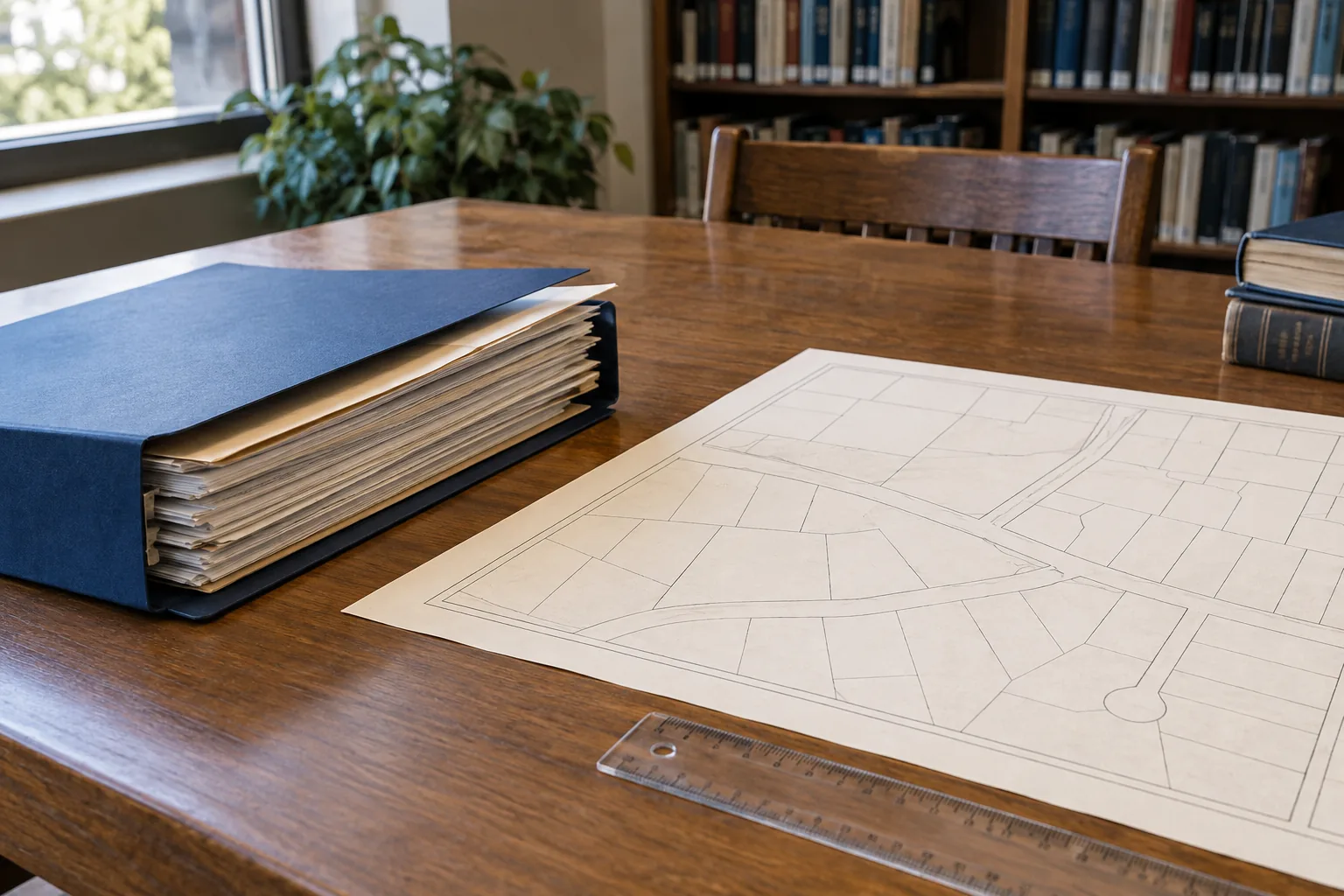
Start with the petition, not the number of rows
Find the petition form and read its caption and docket number. The caption identifies the petitioner and respondent; the docket number is the stronger link across the archive. Then identify the first parcel listed on the form and the question being appealed. A petition can address valuation, classification, exemption, or another issue. The attachment does not change that basic question merely because it adds more parcel identifiers.
In the Entire Tribunal property petition, the form has a field for a parcel number and directs filers with more than one parcel to use a multiple-parcel attachment. It also asks about the relationship among the parcels. That form design explains why the extra sheet may have little narrative text: the main petition carries the parties and claim, while the attachment supplies additional property lines. An archive may display those sheets as two PDF links, one merged packet, or repeated copies under different docket entries. Check the pages, not just the filenames, before deciding how many petitions you are seeing.
For a concrete archive example, open the Reserve Flats case record. Its document list includes an Entire Tribunal property petition and a file labeled as a multi-parcel attachment. The example is useful because it shows the two roles side by side. It does not imply that another company's parcels or dispute are connected to Reserve Flats. Use the archive's docket and visible pages to confirm the relationship within this one case.
If the first PDF opens on a cover page, keep reading until you reach the signed petition and any continuation pages. A scan can include a transmission sheet, a notice, or a copy of an earlier form before the attachment. Conversely, a filename that says “petition” can contain the attachment as later pages. The sensible unit for your notes is the actual page and document, not the website's download label.
Make a parcel inventory before comparing values
A multi-parcel sheet may repeat the same columns for each property. Copy its headings into your research notes before copying the numbers. Parcel identifiers, street addresses, assessed values, taxable values, and tax years can look similar when the page is reduced in an embedded viewer. An unlabeled number is easy to move into the wrong field. Use the printed heading as the anchor for every value you transcribe.
| Write down | Why it matters |
|---|---|
| Parcel identifier exactly as printed | It distinguishes one property line from another, even if addresses are similar. |
| Tax year attached to that line | A filing date is not automatically the year under appeal. |
| Column label for each value | Assessed, taxable, and true cash value are different labels. |
| Source page and document | It lets another reader verify the line in the PDF. |
| Unclear or missing characters | A question mark is safer than silently repairing a blurred identifier. |
This is a reading worksheet, not a statement that every petition uses these fields. Some forms use an additional page or schedule with different headings. A document may also attach an assessment notice, property record card, or tax bill for each parcel. Keep the form's parcel list separate from supporting material. The petition says what the filer presented; an assessor's card or tax bill is a different source with its own date and purpose.
The parcel-and-tax-year guide explains how to preserve the labels when a case spans more than one year. That distinction becomes especially important in a multi-parcel file. A reader could accidentally pair the tax year from the first petition page with a value on an attachment that concerns a different year. Write the year alongside each value, rather than once at the top of the spreadsheet.
A street address is helpful but not a substitute for the parcel identifier. A property may use a mailing address different from its site address. A multi-building development can show several parcel numbers under one familiar project name. A changed street description can also appear across dated records. When an address and identifier seem to conflict, report the conflict and inspect the source documents; do not force a match because the names seem close.
Understand what a shared docket does and does not show
One docket may group the filing material for more than one parcel. That fact does not make the parcels interchangeable. The Tribunal's forms and rules describe limited circumstances for including multiple parcels in one petition, including questions about contiguity and assessing unit. Those are filing rules. As an archive reader, your first task is narrower: describe what the filed documents say and how the documents connect. Avoid announcing that the filing complied with every rule unless the relevant record actually establishes that conclusion.
A case caption often names a business or owner rather than every property. Search engines may surface the caption but omit the attachment. If you use only a search-result snippet, you may never see that several parcel lines were attached. Open the full record and the PDFs. The archive's count of attachments tells you how many files are shown, not how many parcels or tax years are in dispute. A single file can contain several sheets, while several links can point to copies of the same pages.
A case can later narrow. An amended petition, stipulation, partial dismissal, or final decision may treat only some parcels or years. Therefore the initial attachment describes an opening position, not necessarily the final scope. If the docket has later filings, move forward through them before writing a sentence such as “all listed parcels were decided.” The guide to checking archive completeness explains why a visible packet might stop before the final ruling.
Read a row in context
Imagine an attachment with three parcel lines. The first row has an identifier, a 2026 year, and two value columns. The second row has the same year but an address suffix that resembles the first property. The third row lacks a readable identifier because the scan is faint. A rushed summary might say the petition disputes the same value for three buildings. The document does not support that. Each row may have different numbers, and the third row may need confirmation from a clearer source.
A more careful note would say: “The petition includes a multiple-parcel attachment with three visible rows. The first two parcel identifiers and their 2026 value labels can be read; the third identifier is unclear in the available copy.” That note records what was seen and where the uncertainty lies. It does not transform an unreadable line into a confident property match. If a later, clearer filing supplies the identifier, cite that later page and preserve the fact that the earlier copy was difficult to read.
The same discipline applies to totals. Some schedules show an amount on every parcel line and a total at the bottom. Do not add the total as if it were another parcel. Check whether the printed label says “total,” “subtotal,” or “amount in dispute.” If the arithmetic appears inconsistent, record the printed figures and the inconsistency separately. OCR often drops commas, decimal points, and leading digits in narrow table columns. The guide to exhibit tables gives a method for checking those columns against the visible page.
Where the attachment has a checkbox or handwritten note about contiguity, read it as a statement in the filing, not a geographic finding by the website. An unchecked box can mean an omitted response, a poorly captured mark, or a form version where the response appears elsewhere. Do not supply an answer from a map without explaining that you used another source. This article is concerned with what the public case file itself shows.
Keep the source documents distinct
The petition and its multi-parcel sheet are usually only the beginning of the record. A related notice of assessment, Board of Review decision, tax bill, valuation disclosure, or property card may appear later. Each has a different role. The petition states the filer’s claim. An assessment notice reports a government action. A valuation disclosure offers an analysis or position. A Tribunal decision states what the Tribunal decided. Treating these as interchangeable can turn a requested value into a final value in a search snippet or research note.
For example, if a petition asks for a lower taxable value on two parcels, a later tax bill may still show the earlier figure because it was issued before a decision. That is not necessarily a contradiction. Write down each document's date and role, then ask whether a final decision or corrected bill appears. The assessment-notice guide and tax-bill guide cover those documents separately.
An attachment may also contain property descriptions, parcel maps, or a spreadsheet prepared by a party. A map can help locate property, but it does not replace the exact parcel identifiers on the filed form. A spreadsheet may contain formulas or preliminary estimates, while a signed petition presents the claim made in the case. If the papers are split among several PDFs, use the docket row and page labels to reconstruct the sequence. Preserve source filenames when citing, but do not let filenames overrule the visible page headings.
A repeated PDF is not automatically a later amendment. Some systems show the same original petition on its filing row and again as a complete-case copy. Compare the first page, signature, date, and parcel rows. If they are identical, describe the repetition as duplicate access to the same document. If they differ, note the versions and identify what changed. The subsequent-filing guide explains why a generic later-file label is not enough to establish an amendment.
Follow the case without merging parcel outcomes
When a later docket entry appears, ask which parcels it names. A motion may address service, scheduling, or evidence without changing the property list. A stipulation might resolve only certain rows. A partial dismissal can remove part of a case while other issues remain. A final decision may list values in a table; check whether every parcel and year from the initial attachment appears in the operative language. Do not copy a value from a discussion section and present it as the final value for all parcels.
A practical way to read the sequence is:
- Opening scope: Record the docket, parties, petition issue, and every readable parcel-year pair on the petition and attachment.
- Later changes: Note any amended filing or order that explicitly adds, removes, or narrows a parcel or year.
- Decision scope: Read the final operative section and its attached schedule, if present, for the parcels and years actually decided.
This three-stage note is often more useful than a single summary paragraph. It makes it clear when the source of a statement is the petition rather than a later ruling. If no final order appears in the available archive, stop at the last visible event. The docket's status label can provide context, but it is not a substitute for the actual order. The status guide helps explain that difference.
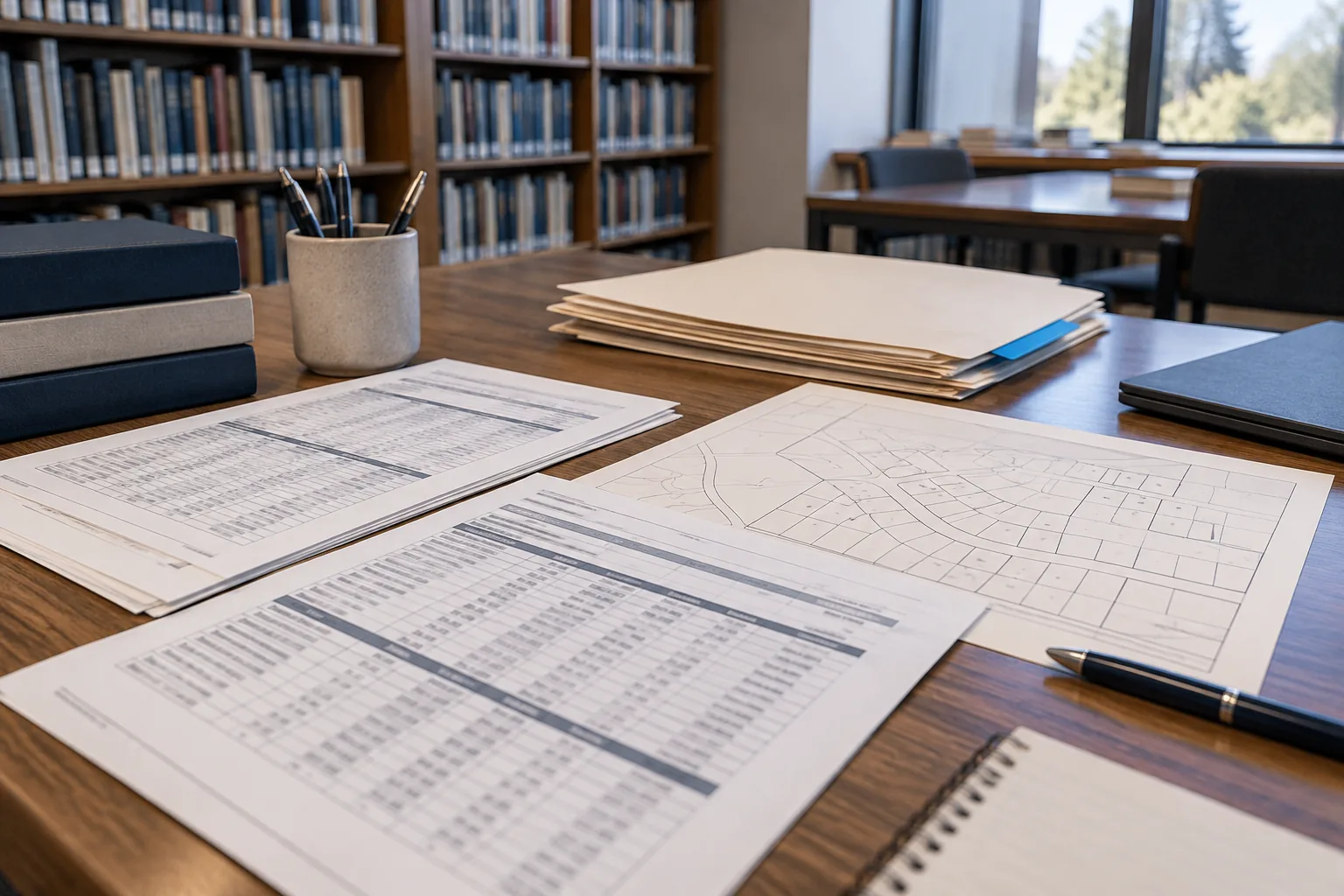
Check the HTML reading copy against the PDF
A searchable document page is convenient for locating parcel numbers, but tables are particularly vulnerable to text-extraction errors. Text may be read down a column instead of across a row. A value may move next to the wrong parcel, a slash may disappear from an identifier, or a handwritten correction may not be recognized at all. Use the extracted text to find the page, then inspect the upright PDF copy for the layout and the actual row labels.
If a line is sideways or a scan is poor, rotate the viewer or use the corrected reading copy. Compare the count of pages and look for continuation sheets. A page that says “Page 2 of 2” can be missing from a partial archive PDF. If the file displays only the first page, do not assume the remaining parcels were absent from the filing; say the available copy is incomplete. Likewise, a blank row may be part of an unused form template rather than an unidentified parcel.
When you cite an attachment, include enough detail to find it again: the docket number, the document title or preserved filename, the page, and the parcel identifier or row. If a document page has its own URL, link to it for quick reading but also link to the full record for case context. The citation guide shows an example of that two-level citation. It is especially valuable when filenames such as EntireTribunalCaseISPetition.pdf recur across many unrelated cases.
Keep corrections transparent. If you initially wrote one parcel identifier and later discovered that a scan had obscured a digit, update your note with the corrected reading and source page. Do not silently replace the original observation if someone else may already have relied on it. A simple “Earlier transcription corrected after checking page 3 of the PDF” preserves the research trail.
A short worked example
Suppose a docket lists an Entire Tribunal petition, a multiple-parcel attachment, a notice of docket number, and a later filing. The petition names one petitioner and one respondent. The attachment lists two readable parcel numbers. The notice gives the case's assigned docket number. The later filing includes a valuation sheet for only the first parcel. What can you say? The public file shows one case with at least two listed parcel lines in the opening petition material. The later sheet addresses the first parcel. You cannot say from these facts alone that the second parcel was abandoned or that both received the later proposed value.
If an eventual Tribunal order covers the first parcel only, read its words to see whether it dismisses the remainder, reserves it, or leaves it unresolved in the available copy. “Not mentioned in this order” and “dismissed” are different findings. If the archive is incomplete, you may need the official docket or a later record to resolve the question. Do not infer the end of a parcel's appeal from the absence of a PDF on one website.
The Reserve Flats record is a real example for practicing the first step: find the petition and the multi-parcel attachment under one docket, then check the page labels. It is not a template for every case. Another petition may use a different form version, include personal property, or attach a separate schedule. The method—identify the document, keep each parcel-year pair intact, and follow later case events—still applies.
A reliable public-record summary is modest. It names the source and the visible scope, and it says when the available pages do not answer a question. That makes the summary useful to a reader who needs to check a parcel without confusing a filed claim with a final assessment or a separate case.