How to Read Parcel and Tax-Year Fields in a Property Tax Case
A property tax case may show a parcel number, a street description, one or more tax years, and several values. Those fields look like a compact answer to “Which property is this about?” They are better read as separate clues. A parcel number helps identify land in a particular assessing system. A tax year tells you which assessment period is being discussed. A value may be one party’s position rather than a finding. Read them together with the docket and underlying documents before making a claim about a property or its taxes.
This guide explains how to organize fields visible in public Michigan tax-case records. It does not calculate a tax bill, identify the current owner of any property, or tell anyone how to pursue an appeal. Examples are hypothetical, with invented identifiers and values. The source record and current assessing authority remain the places to verify a specific property.
Start with the kind of case
The Michigan Tax Tribunal hears property and non-property tax matters. A parcel field is most useful when the matter actually concerns property. A non-property case may involve a different kind of assessment and may not have a land identifier at all. Even within property matters, the issue could be valuation, an exemption, a special assessment, or another question. The presence of a parcel number does not tell you which issue the parties raised.
First read the case title, the recorded case type, and the document or notice that describes what was appealed. Then make a small identification note: tribunal docket number, jurisdiction, parties as labeled, issue if stated, and the source page you opened. This gives the parcel number a context. Without it, a copied number can drift away from the case in which it appeared.
The tribunal’s glossary describes a docket number as the number it assigns to an appeal. That is a case identifier, not a property identifier. A single docket may discuss more than one parcel, and one parcel may appear in more than one proceeding or tax year. Do not substitute one number for the other in a search note or citation.
Three identifiers with different jobs
Think of the record as having at least three possible keys. The docket number points to a proceeding. The parcel number points to a property description in a local assessment system. The tax year limits the assessment period at issue. A street address may help a person recognize a location, but it does not replace any of those keys. Addresses can be formatted differently, changed, or shared by several parcels.
Write all three labels when you save a reference. “Case 26-000000, parcel 00-00-000-000, tax year 2025” is easier to check than a bare number pasted into a note. These values are invented here; the point is the labeling. If the source lacks one field, mark it missing instead of filling it from a search result that merely looks related.
A parcel number is an identifier, not a conclusion
Property identifiers are assigned and maintained by assessing authorities. Their formatting may encode local conventions, but the public tax-case page may not explain every segment. Do not reverse-engineer ownership, exact boundaries, zoning, or current use from the digits alone. A parcel number is a way to locate another source that can answer those questions, subject to that source’s own date and definitions.
Read the identifier exactly as displayed before normalizing it for search. Hyphens and leading zeros can matter when comparing one source with another. A screenshot or OCR extraction might turn a zero into the letter O, omit a hyphen, or merge adjacent table cells. If your search fails, compare the visible document rather than assuming the parcel is absent. Record both the original spelling and any search-friendly variation you used.
The parcel field may also be a list. Some cases concern multiple contiguous parcels or several assessments. In that situation, do not collapse the list into one representative number. Create a row for each parcel and note which tax years and documents mention it. A decision that addresses two parcels may assign different values or resolve different issues for each. The docket identifies the proceeding containing those discussions; it does not make the parcels interchangeable.

Check the source of the match
A case heading, a petition, an assessment notice, and a final decision may each identify the property. They have different roles. A petition describes what a party brought to the tribunal. A notice may reproduce an agency or local unit’s identifier. A decision may state what the tribunal found or ordered. If their parcel descriptions differ, preserve the difference and identify which source says what. Do not silently choose the most convenient version.
An archive record can also be incomplete. A parcel number in a docket entry may point to an attachment you cannot read, or a PDF may be scanned poorly. In that case, write “parcel number appears in the docket summary” rather than implying you verified it in the attachment. The quality of the evidence matters as much as the apparent precision of the digits.
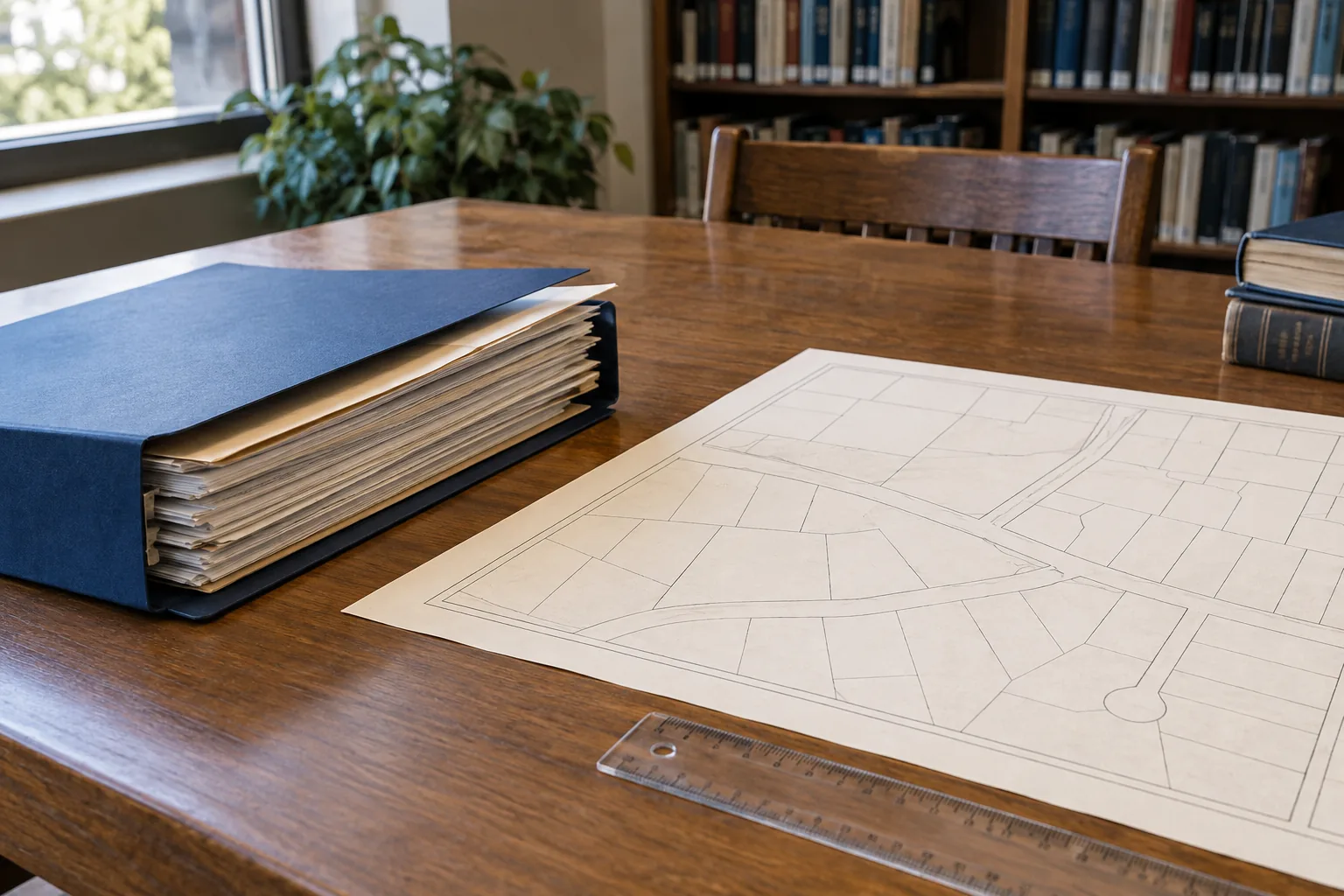
For a specific property, compare the tribunal record with an appropriate current local source if the question requires current information. Keep the tribunal’s historical statement and the current source as two separate observations. A later parcel map or assessment roll should not be used to rewrite what an older case document said. Nor should the older case be treated as an up-to-date property profile.
Tax year is not the date the document was filed
The tax year at issue can differ from the year the appeal began, the date printed on a notice, the date a docket row was entered, and the date a decision was issued. All may be visible on one record page. A reader who compresses them into a single “case year” can misstate the period actually disputed.
Make a small date table instead. Give separate columns to tax year, assessment or notice date if stated, petition date, docket-entry date, document date, decision date, and the date you accessed the archive. You do not need to fill every column. A blank with a note such as “not shown in this source” is more accurate than carrying the nearest visible date into the wrong field.
Hypothetical example: A case page lists tax year 2024. A petition PDF is dated August 2024, a docket row was entered in September 2024, and an order was issued in February 2025. Those dates describe different things. The 2025 order date does not transform the disputed assessment into tax year 2025. Likewise, a 2024 tax-year label does not prove that every document in the file was filed during 2024.
Some property appeals discuss more than one tax year. If the page or order lists multiple years, record them individually and check which parcel and issue each year belongs to. Do not assume a value stated for one year applies to another. A table row is particularly easy to misread when repeated parcel numbers sit next to different years. Follow the column headings on the visible source, not just the order in which OCR extracted the words.
Why the year label matters in a comparison
Suppose you find two cases with the same parcel number. Before treating them as duplicates, compare the docket numbers, parties, issues, and tax years. They may be separate proceedings involving different periods. Conversely, two rows under one docket may refer to different years of a single matter. Neither pattern can be established from the parcel number alone.
When you summarize a value, attach its year in the same sentence: “The petition lists a proposed value for tax year 2024.” A sentence such as “the property is worth this amount” drops both the date and the fact that it may be a party’s position. If the source does not say whether a figure is proposed, assessed, taxable, or ordered, do not invent the category. Quote the field label sparingly or describe the uncertainty.
Know which value you are looking at
Michigan tax materials can use terms including assessed value, state equalized value, and taxable value. The tribunal’s glossary distinguishes these terms and also describes amounts “in contention” as differences between the positions of petitioner and respondent for each tax year at issue. A case page may contain several numbers precisely because the parties disagree. Those numbers should not be averaged into one supposed official value.
Read the heading above a figure and the column beside it. Ask who supplied the number and in what document. A petition may request one value; an answer may assert another; a judgment may resolve an issue. A number in an exhibit might be an appraisal input or comparable transaction rather than the parcel’s final value. If the page is only a summary, inspect the relevant PDF when available.
This is a reading distinction, not a method for computing taxes. A property-tax bill can depend on information and rules outside a tribunal archive page. Do not infer an amount due, a refund, or a change to today’s assessment solely from a case value. The current assessing or taxing authority is the appropriate source for current account information.
A simple value-note format
For each number, record: the exact field label, amount as printed, tax year, parcel if multiple are involved, document title, page number, and speaker or issuing body. Add a short status such as “party request,” “respondent position,” “tribunal finding,” or “unclear from excerpt” only when the source supports it. This makes later comparison possible without turning a contested figure into a fact.
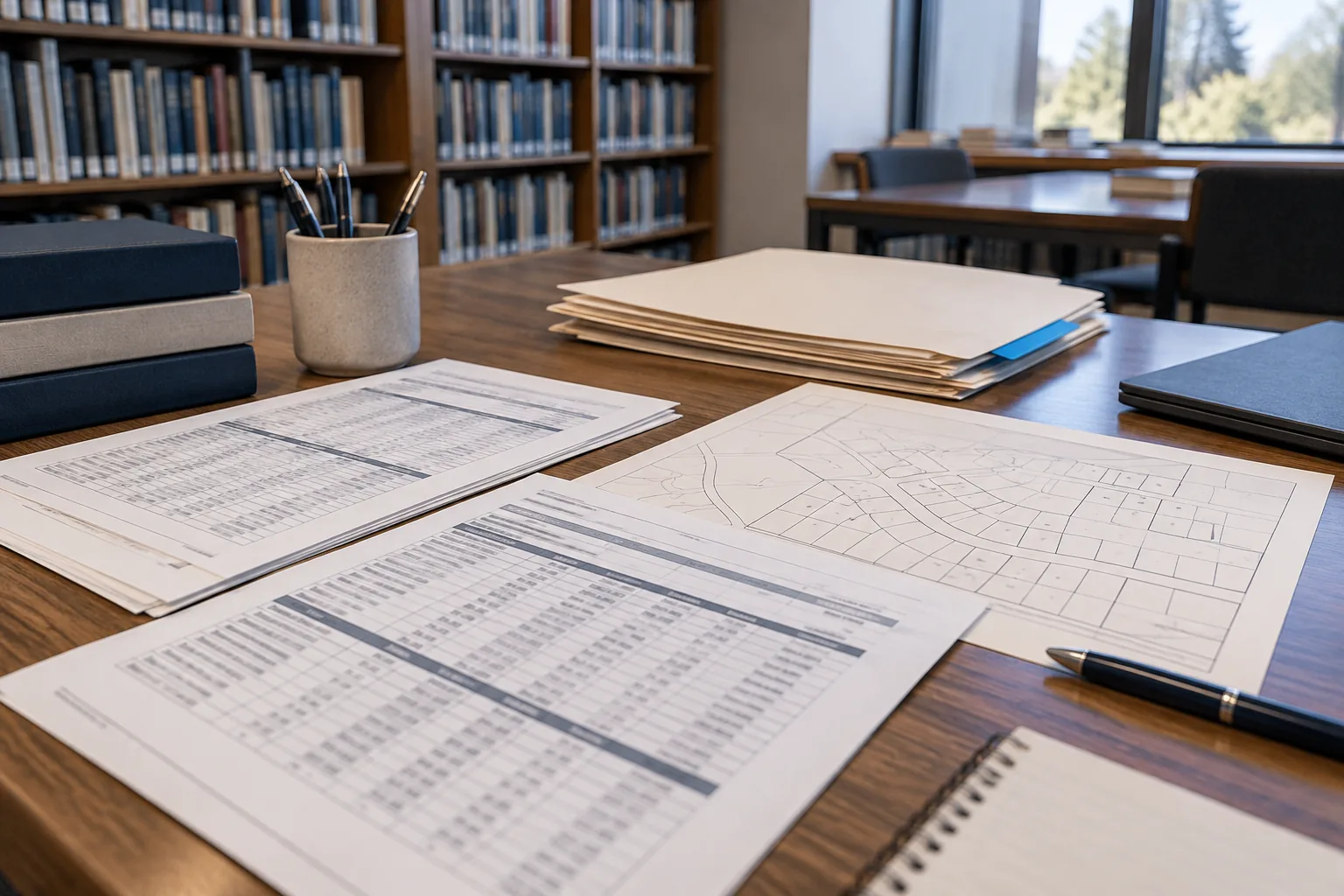
If an order lists several values, preserve its row structure. A copied paragraph may lose the pairing between parcel, year, and value. A table or photograph of the page can help you check the alignment, but your written note should still say where each number came from. Do not rely solely on OCR for digits: one changed numeral can materially alter a comparison.
Work through a hypothetical record
Imagine a public case page titled “Example Property LLC v. Sample Township.” It shows docket number 26-000000, two parcel identifiers, and tax years 2024 and 2025. The document list includes a petition, an answer, an exhibit packet, and an order. None of these names or numbers belongs to a real case in this example.
Start by writing the docket number and source URL. Next, copy each parcel number into a separate row. Add the years only where the visible page or a document links that year to that parcel. If the page simply lists both parcels and both years without a clear pairing, do not create four assumed combinations. Write “pairing not established on summary page” and inspect the petition or order.
Now look at the exhibit packet. Suppose it contains photographs and a table of comparable sales. The exhibit shows what one party submitted; it does not automatically establish what the tribunal accepted. Note its title and pages without describing the table as a final ruling. Then inspect the order. If it resolves only one year or one parcel, say exactly that. The other listed items may remain outside the portion you reviewed or may be addressed elsewhere.
Finally, make a bounded summary: “This archived docket lists two parcels and two tax years. The order reviewed here states a result for parcel A in tax year 2024; this review did not establish a result for parcel B or tax year 2025.” That sentence is less sweeping than “the entire property-tax dispute was settled,” but it is easier to verify and less likely to mislead.
Watch for address and ownership traps
A street address is helpful for navigation, yet it may be missing, abbreviated, or different from a mailing address. The respondent in a tax appeal is not automatically the property owner; the respondent may be a local unit or another government entity. A petitioner name also should not be presented as proof of current ownership. The relevant role is the one shown in the case, not a title inferred from proximity to the parcel number.
If you need to distinguish two nearby properties, use the parcel identifiers and an appropriate property source rather than a street-name match alone. Multi-unit buildings, vacant land, combined lots, and renamed roads can complicate address comparisons. A case record may describe a historical assessment while a present-day property lookup reflects later changes. Preserve both dates.
Be careful with records that contain many named people. A signer, agent, attorney, representative, or person in an exhibit may have no ownership role. The tribunal record can help identify that person’s role in the proceeding, but it may not answer the separate question of who owned a parcel at a particular time. If ownership matters, use a source designed to establish it and explain the relevant date.
Make a parcel-and-year reading sheet
A compact worksheet can prevent most of these errors. Put the docket number, jurisdiction, case title, and archive URL at the top. Then add one row per parcel-and-year combination that the sources actually support. Give each row columns for source document, page, exact parcel spelling, tax year, issue, value label, amount, and uncertainty note. Do not add combinations merely because two lists appear near each other.
At the bottom, keep an “unresolved” section. Examples: “Is the address a mailing address or site address?” “Does the order address the second parcel?” “Which tax year does this exhibit table cover?” An unanswered question is not a defect in your notes. It is a signal that the public material you reviewed has not established a broader claim.
When you revisit the record, compare the version you see with your earlier source notes. A newly available attachment or corrected display may answer an open question. Record when you saw the change. Do not silently alter an old statement about what was visible on an earlier date.
Quick checks before sharing a summary
- Is the number I call a parcel number actually labeled that way in the source?
- Have I kept it distinct from the tribunal docket number?
- Did I preserve leading zeros and the exact visible spelling?
- Does the source connect this parcel to this specific tax year?
- Is each amount labeled as assessed, taxable, proposed, contested, or ordered as appropriate?
- Did I identify who made the statement and which document contains it?
- Does my summary describe the period at issue rather than implying a current property fact?
- Have I marked missing pages, ambiguous pairings, and unreliable OCR as limits?
This checklist supports careful reading; it does not determine the legal effect of a filing or decision. A consequential question should be checked against the complete official record and qualified professional advice where appropriate.
Frequently asked questions
Is a parcel number the same as a case number?
No. The tribunal docket number identifies an appeal. A parcel number is a property identifier used in an assessment context. A case may include several parcels, and a parcel may appear in more than one case.
Does the year in the case number identify the tax year?
Do not assume it does. Read the tax-year field and relevant documents. A case identifier, a petition date, and a tax year have separate purposes even when some digits happen to match.
Can I use an address to confirm a parcel?
An address is a useful clue, but it is not always unique or current. Compare the parcel identifier and a source with the right date and authority for the question you are answering.
If a petition lists a value, is that the decided value?
Not by itself. A petition describes a party’s position or request. Look for the relevant decision or order, and check which parcel and year it addresses. Do not turn a requested amount into a tribunal finding.
What if the PDF text and visible table disagree?
Inspect the page image and its headings. OCR can misread digits or move a number into the wrong column. Record the discrepancy and avoid a numerical conclusion until the visible source is clear.
What if the archive omits a parcel or year I expected?
Describe the scope of what you found. An omission on one archive page does not prove that the issue was never raised or that no other official record exists. Recheck the official source if the missing item matters.
Conclusion
The safest reading ties every parcel number to a named source, every value to its field label and speaker, and every claim to a specific tax year. The docket number keeps the proceeding together; it does not collapse different parcels or years into one fact. Keeping those distinctions visible makes a public case easier to understand without asking it to answer questions outside its record.